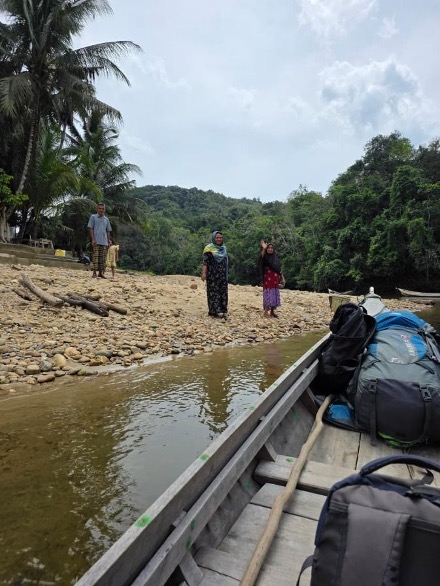
In Gajah Bertalut Village, located near the Rimbang Baling Wildlife Sanctuary, community life flows according to the rhythm of nature and tradition. It is there that Mrs. Laely (39 years old) grew up and raised her family, side by side with the forest, which has long been a source of life.
Since childhood, she has known the forest as a place where her parents tapped rubber, foraged for fruit, and harvested natural resources as needed. Furthermore, the community also cultivated gardens near the forest to grow rice, chilies, and vegetables. All of this was done according to customary values that emphasize balance, taking without destroying.
However, changes in government regulations prohibiting farming activities within forest areas, including the practice of clearing land by burning, have introduced a new dynamic. This policy aims to prevent widespread forest and land fires. The community, including Mrs. Laely, understands the importance of this approach.
On the other hand, this prohibition presents economic challenges. Without adequate land preparation tools, clearing land without burning requires greater costs and effort. Meanwhile, household needs continue to run smoothly, and staple food prices remain volatile.
Economic Adaptation: From Farm to Grocery Store
Facing this situation, Mrs. Laely and her husband chose to adapt. They opened a small grocery store in front of their house as a new source of income. The store provides daily necessities for residents, including rice, cooking oil, sugar, and even snacks for children.
The store slowly became a new social space in the village, a place where residents can chat, exchange news, and support each other. Mrs. Laely plays a major role in managing this business, recording income and expenses, managing inventory, while still fulfilling her domestic responsibilities.
This step demonstrates the resilience of village families in responding to change. When access to their fields decreased, they sought alternatives that would not damage the forest and still support their household economy.
Mrs. Laely explained that they actually wanted to return to farming, growing rice and vegetables, because now they had to buy all these products, whereas previously they could simply pick them from the fields. However, with government regulations, they find it difficult to cultivate using their existing methods, which involve shifting cultivation and burning before planting. Ms. Laely and several residents of Gajah Taliut village also expressed their hope that they would be provided with equipment for cultivating their land, as well as capital for plant nurseries, generally encompassing Non-Timber Forest Products (NTFPs), fast-growing wood species, and agroforestry plants that support conservation and economic functions. Examples include rubber, coffee, cocoa, sengon, pine, teak, bamboo, damar, and various (productive) fruit trees.
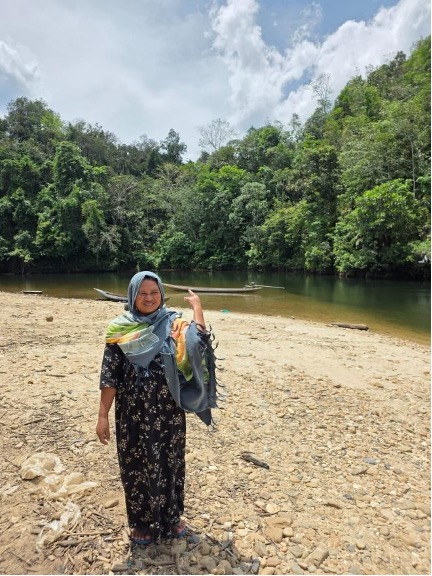
Mrs. Laely (39 years old) is one of the shop owners in Gajah Bertalut Village, Rimbang Baling Wildlife Sanctuary Area, Riau Province
The Role of Ninik Mamak and Kampar Malay Traditional Elders
In this process of change, the role of ninik mamak and Kampar Malay traditional elders is also crucial. As guardians of traditional values and norms, they serve as a bridge between government policies and the daily lives of the community.
At a meeting held by experts on indigenous communities and GEDSI experts from the Green for RIAU Initiative, Pak Datuk explained that through customary deliberations, the community's ninik mamak (leaders) helped explain the importance of protecting forest areas and avoiding practices that risk triggering fires. They also reminded the Kampar Malay people of their philosophy: protecting nature means protecting their dignity and the future.
Traditional elders not only serve as guardians of the rules, but also as calmers when economic unrest arises. They encourage dialogue, prioritize consensus, and ensure that village decisions consider the common good, including women and small families like Mrs. Laely's.
From the GEDSI perspective, the existence of ninik mamak and traditional elders is a crucial entry point for ensuring culturally based social inclusion. When traditional values align with the principles of sustainability and justice, change becomes more easily accepted.
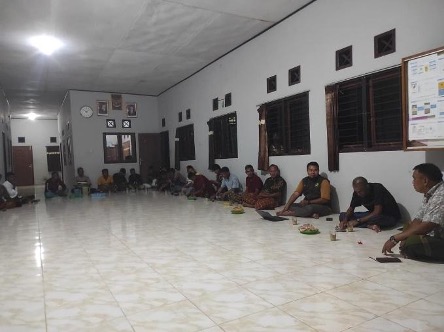
Documentation of discussion and socialization of Green for Riau activities in Gajah Bertalut Village, Saturday, February 28, 2026
GEDSI Perspective: A Just and Inclusive Transition
Mrs. Laely's story demonstrates that the transition to zero-burning practices and forest protection requires a comprehensive approach.
A ban alone is not enough; concrete support must be provided, such as:
- Access to environmentally friendly agricultural tools and training.
- Capital support and strengthening of small businesses such as small grocery stores.
- Women's involvement in village deliberations and traditional forums.
- Strengthening the role of ninik mamak as strategic partners in sustainable development.
The GEDSI approach ensures that policy changes do not widen disparities, but instead strengthen the collective capacity of communities.
Protecting Forests, Protecting Dignity and the Future
For Mrs. Laely, forests are more than just protected areas. They are a legacy and a gift. She wants her children to continue to see green forests, clean rivers, and vibrant villages.
The small shop she now manages with her husband is a symbol of adaptation. Meanwhile, the traditional values upheld by the ninik mamak (leaders) serve as the moral foundation of the village. Between the two, there is hope that conservation and prosperity can go hand in hand.
Through initiatives like Green for Riau, the community hopes to strengthen a green economy that aligns with local customs and needs. Through collaboration between the government, development programs, village women, and the ninik mamak (leaders) and traditional elders who are also entering their senior years, Gajah Bertalut Village demonstrates its commitment to the idea that change can be navigated with dignity.
There, forests are protected. Traditions are respected. And the future is fought for for generations today and tomorrow.