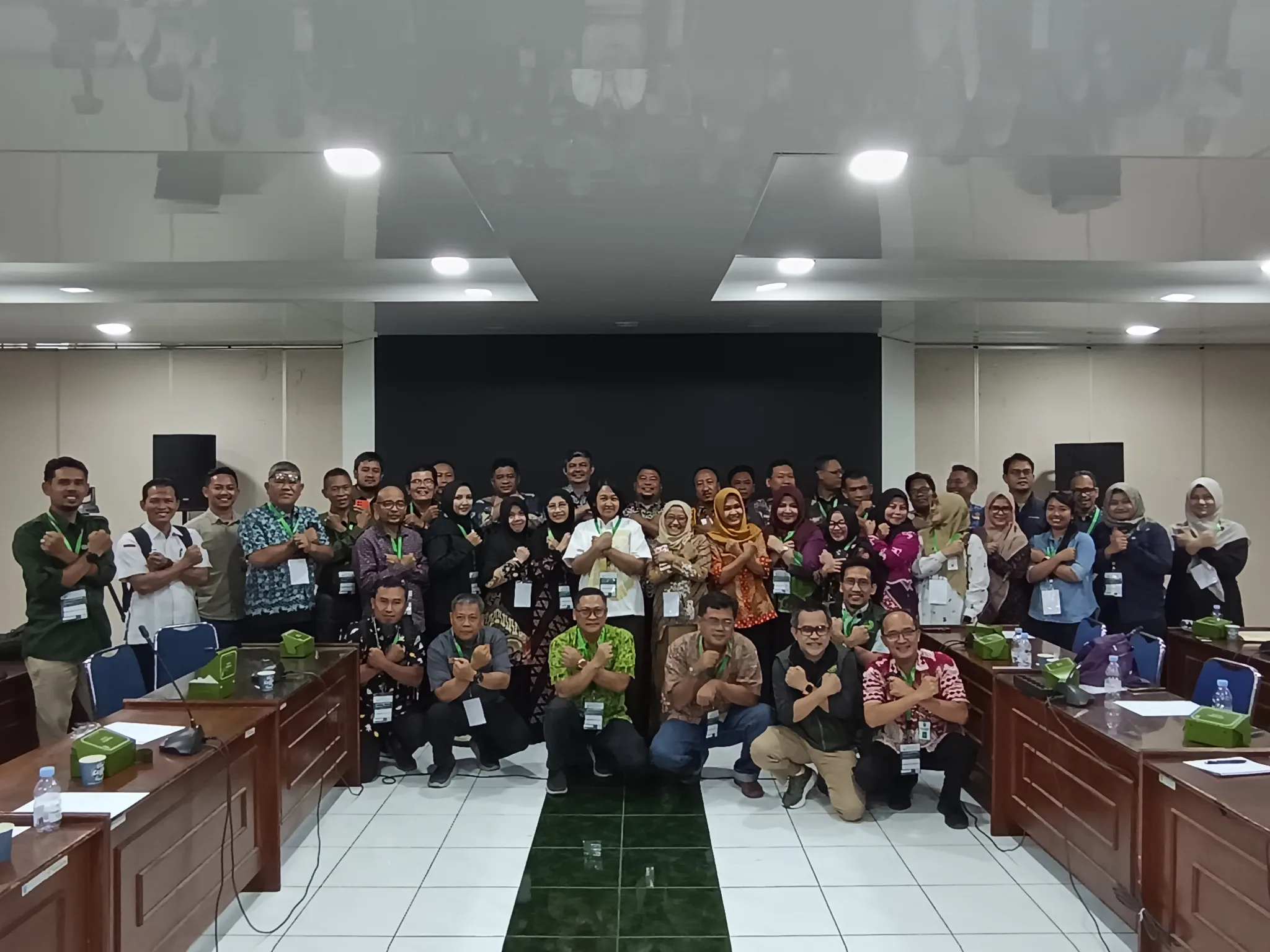
Pekanbaru, February 12, 2026 — The Riau Provincial Government, in collaboration with UNEP UN-REDD Programme in Indonesia, held a Focus Group Discussion (FGD) on the Identification of Roles and Responsibilities in the implementation of the GREEN for Riau Initiative in the Parlaungan Meeting Room, Riau Province's Regional Development Planning Agency (Bappeda). This activity is a strategic step to strengthen governance for reducing emissions from the forestry and land use sector (JREDD+) at the regional level.
As one of the priority provinces for REDD+ implementation in Indonesia, Riau makes a significant contribution to national emissions reduction efforts from the forestry and land use sector. Therefore, strengthening governance through clear functions, working mechanisms, and stakeholder accountability is a key prerequisite for accessing and effectively implementing results-based funding schemes at the regional level.
This initiative was made possible thanks to financial support from the UK Foreign, Commonwealth & Development Office (UK-FCDO) and technical assistance from the UN-REDD Programme (UNEP and FAO), which is coordinated by the Ministry of Forestry.
UNEP UN-REDD Programme Indonesia Country Coordinator, Bambang Arifatmi, emphasized that the primary goal of the GREEN for Riau Initiative goes beyond carbon funding.
"The main goal of this initiative is not simply to obtain carbon incentives, but to transform forest and land landscape management to return Riau to green through cross-sectoral collaboration," he said.
He added that the program's success depends heavily on the clarity of each institution's role to avoid sectoral egos and silos between agencies.
National expert Dr. I Wayan Susi Dharmawan explained that the emission reduction approach is implemented at the provincial level because it is the most comprehensive, encompassing all regional units—villages, districts, FMUs, and business permits.
"The jurisdictional approach allows all regional components to be managed within a single framework, so the impact of emission reductions is much more significant," he explained.
He also emphasized that the division of roles does not create new tasks, but rather aligns the main tasks and functions of agencies to be more effective and measurable.
The Head of the Economic and Natural Resources Division of the Riau Province Regional Development Planning Agency (Bappeda), Abdul Madian, emphasized the importance of changing work patterns between agencies.
"In the jurisdictional concept of GREEN for Riau, the failure of one party is the failure of all. Everyone must work as a unified region," he emphasized.
He also highlighted the complexity of the challenges in Riau, including the decline in forest cover.
The focus group discussion (FGD) was attended by representatives of government agencies, forest management units (FMUs), vertical institutions, NGOs, and development partners. Participants developed a role-sharing matrix using the RACI (Responsible, Accountable, Consulted, Informed) method to ensure there was no overlapping of tasks.
Through a participatory discussion process, the FGD aimed to develop a role and responsibility matrix, map authority between agencies, and outline cross-functional processes in carbon governance. This document will serve as a shared reference for the implementation of GREEN for Riau, ensuring that all parties have a clear mandate, are interconnected, and work in harmony.
Through a collaborative and inclusive approach (including the GEDSI principles), GREEN for Riau is expected to become a driving force for regional green development while also opening access to sustainable environmental funding.
This activity is part of a series of REDD+ institutional strengthening efforts in Riau, ensuring that carbon governance is not merely administrative but truly impacts ecosystem sustainability and community well-being.
About the UN-REDD Programme: The UN-REDD Programme is a collaboration between the United Nations (UNEP, FAO, UNDP) to assist developing countries in reducing emissions from deforestation and forest degradation and sustainably managing forests.
About the PILI Green Network: The PILI Green Network is an Indonesian non-profit organization dedicated to strengthening biodiversity conservation and sustainable natural resource management through scientific approaches and multi-stakeholder collaboration.
About PETAI: The PETAI Foundation (Indonesian Center for Education and Nature Transformation) is a non-profit organization that plays a crucial role in conservation and community empowerment, particularly in the Riau region. Within the context of the GREEN for Riau Initiative, the PETAI Foundation acts as a local implementing partner, bridging technical policies with concrete actions at the grassroots level.