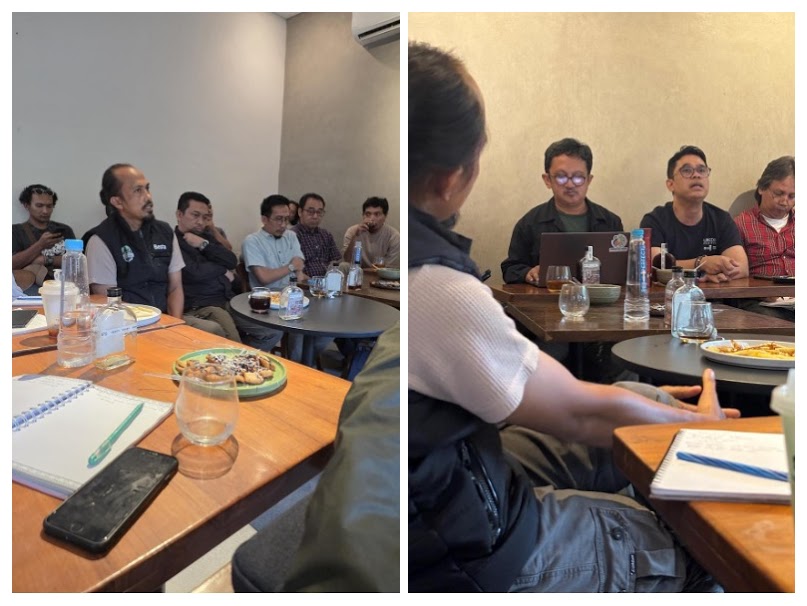
Pekanbaru, January 28, 2026 – The Riau Region Community Forestry Communication Forum (FKKM) and UNEP UN-REDD Programme Indonesia held a discussion titled "Discussions on the GREEN for Riau Initiative Program" on Wednesday, January 28, 2026, at the Aksen Kopi Meeting Room in Pekanbaru. This activity was part of the program's socialization and the initial step in involving NGOs and civil society organizations in the implementation of GREEN for Riau.
As stated in the invitation letter No. 006/FKKM Riau/I/2026, GREEN for Riau is a strategic initiative to strengthen Riau Province's readiness to implement jurisdiction-based REDD+ with integrity. This program requires an inclusive, participatory approach that is sensitive to socio-ecological dynamics at the grassroots level.
The discussion was attended by 22 representatives from civil society organizations, local NGOs, and development partners, as listed in the attendance list. Among those present were representatives from the Riau Forestry Forum (FKKM Riau), Bahtera Alam, PPSW Riau, the Mitra Insani Foundation, the Gambut Foundation, the Village Empowerment and Action Institute (Persada), Paradigma, the Riau Forest Foundation, LPESM, the Forest Peoples Programme (FPP), the KABUT Riau Foundation, the ELANG Association, PASA, and representatives from UNEP.
In the dialogue-driven forum, participants discussed the direction of GREEN for Riau's implementation in the readiness phase within the Jurisdictional REDD+ (JREDD+) framework, including governance challenges, the dynamics of inter-actor relations, potential tenure conflicts, and the importance of strengthening community participation mechanisms and the principle of Free, Prior, and Informed Consent (FPIC).
The discussion emphasized the strategic role of local NGOs and civil society organizations as community advocates and bridges between policy and reality on the ground. With experience in social forestry, conservation, peatlands, indigenous peoples' rights, and capacity building for assisted groups, NGOs are seen as key actors in ensuring that the implementation of GREEN for Riau not only meets emissions reduction targets but also ensures social justice and ecological sustainability.
UNEP Indonesia Country Coordinator, Bambang Arifatmi, stated that the success of the jurisdictional approach is crucially determined by social legitimacy and the quality of stakeholder engagement. "There can be no effective REDD+ implementation without the meaningful involvement of communities and civil society organizations. Forums like this provide a crucial space for building trust, aligning perceptions, and strengthening collaboration," he said.
Meanwhile, Hasan Supriyanto, a representative of the Riau Regional FKKM (FKKM), emphasized that this discussion forum is not simply a one-way socialization, but rather a starting point for building multi-stakeholder collaboration. Input from NGOs will be crucial in developing action plans, safeguards frameworks, and future communication and stakeholder engagement strategies.
This discussion marked the first milestone in consolidating the role of NGOs in supporting GREEN for Riau as part of a shared commitment to forest and peatland governance with integrity, low emissions, and equity for the people of Riau.
Participants hoped that similar meetings would be scheduled regularly as part of the multi-stakeholder consultation and coordination mechanism for the implementation of GREEN for Riau. This forum is expected to provide a space for open dialogue to strengthen trust, align perceptions, and early identify potential social and institutional challenges that may arise at the grassroots level.
This regular forum will also be used for learning exchange, discussing REDD+ policy developments and the 2030 FOLU Net Sink, and strengthening the capacity of civil society organizations in various aspects. Thus, GREEN for Riau will not only be a technical program for reducing emissions, but also a platform for transforming inclusive and equitable forest and peatland governance.