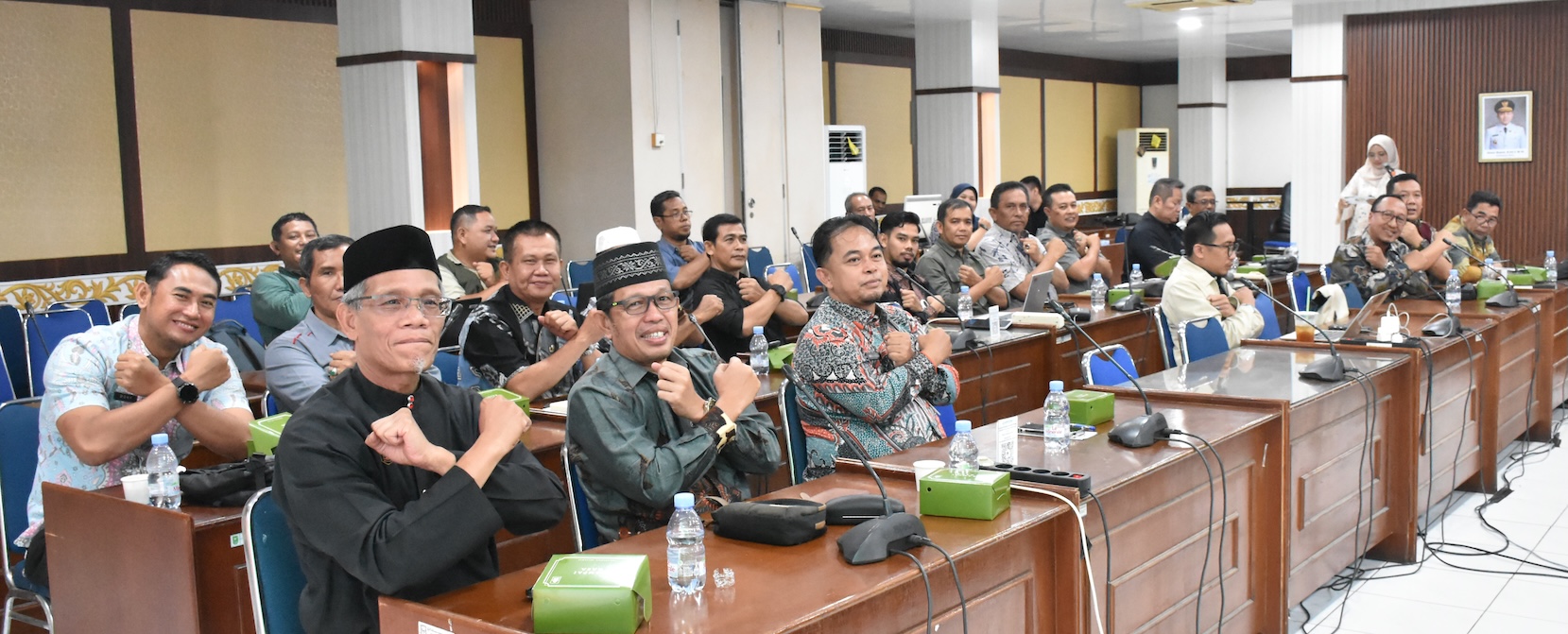
Pekanbaru, 24 September 2026 — The Riau Provincial Government, together with the GREEN for Riau initiative, held a consultation on the framework and initial draft of the Riau JREDD+ Benefit Sharing Plan (BSP) involving Indigenous Peoples, Forest Management Units (KPH), and other relevant stakeholders. The consultation represents a strategic step in preparing Riau as one of the pioneers of jurisdictional REDD+ implementation in Indonesia, with the aim of meeting ART-TREES standards and opening opportunities to access global carbon economic value.
Through this consultation, the Riau Provincial Government and the GREEN for Riau initiative gathered views and inputs from stakeholders on the principles and mechanisms of JREDD+ benefit sharing. The discussion covered who should be entitled to receive benefits from emission reduction efforts, approaches for assessing the contribution of each party, and mechanisms for distributing benefits in a transparent, inclusive, and equitable manner.
Danang Kabul Sukresno, Provincial Lead of GREEN for Riau, expressed appreciation for the commitment of the Riau Provincial Government to transform natural resource governance—particularly mineral soils, peatlands, and mangroves—in a sustainable manner.
 Issues related to the clarity of customary territory status, institutions, spatial planning, and the application of the Free, Prior and Informed Consent (FPIC/PADIATAPA) principle were also major points of discussion. Representatives of Indigenous Peoples from various areas emphasized the importance of using simple language in programme outreach, respecting customary structures (ninik mamak), and providing legal certainty and concrete fairness in benefit distribution.
Presentation of Supporting Elements for Riau’s REDD+ Readiness
The consultation series also included in-depth presentations from several experts on key elements of REDD+ readiness, including:
1. MRV System and FREL Development by Arief Darmawan (FAO)
Presented the methodology for transparently measuring greenhouse gas emission reductions. With Riau Province covering around 9 million hectares and having significant forest cover, the MRV system is designed to ensure that emission calculations—including those from deforestation and peatland management—meet the conservative requirements of ART-TREES while also accommodating the potential for peatland rewetting.
2. GEDSI Mainstreaming by Sita Ari Purnami (Gender Expert)
Highlighted the importance of Gender Equality, Disability, and Social Inclusion (GEDSI) to ensure that the Riau REDD+ programme is inclusive, leaves no vulnerable groups behind, and guarantees meaningful participation from planning through to benefit sharing.
3. Feedback and Grievance Redress Mechanism (FGRM) by Cici Sri Mariati (FGRM Expert)
Prepared as a safe and accessible grievance channel for communities to raise aspirations and address issues at the site level.
In response to inputs from customary leaders, Dr. Matnuril, representing the Riau Provincial Environment and Forestry Agency, expressed appreciation and a commitment to evaluate communication approaches so they are more closely connected to the everyday experiences of Indigenous Peoples. The Government emphasized that the efforts of Indigenous Peoples in protecting the environment and preventing forest fires in their respective areas constitute real performance that should be recognized through a fair benefit-sharing mechanism.
Through this public consultation, the initial BSP draft will continue to be refined based on constructive input from Indigenous Peoples and KPH, so that the final document genuinely reflects conditions and needs on the ground while strengthening sustainable environmental governance in Riau Province.
