JOINT PRESS RELEASE
Green for Riau and the Gambut Foundation
Strengthening Collaboration on Carbon Economic Value for the Benefit of Indigenous Communities and Social Forestry in Riau
Pekanbaru, April 27, 2026 — The GREEN for Riau initiative, together with the Gambut Foundation, affirmed their collective commitment and steps to strengthen jurisdiction-based Carbon Economic Value (CVE) governance in Riau Province through a collaborative, adaptive, iterative, and inclusive approach involving civil society organizations, the government, and other stakeholders.
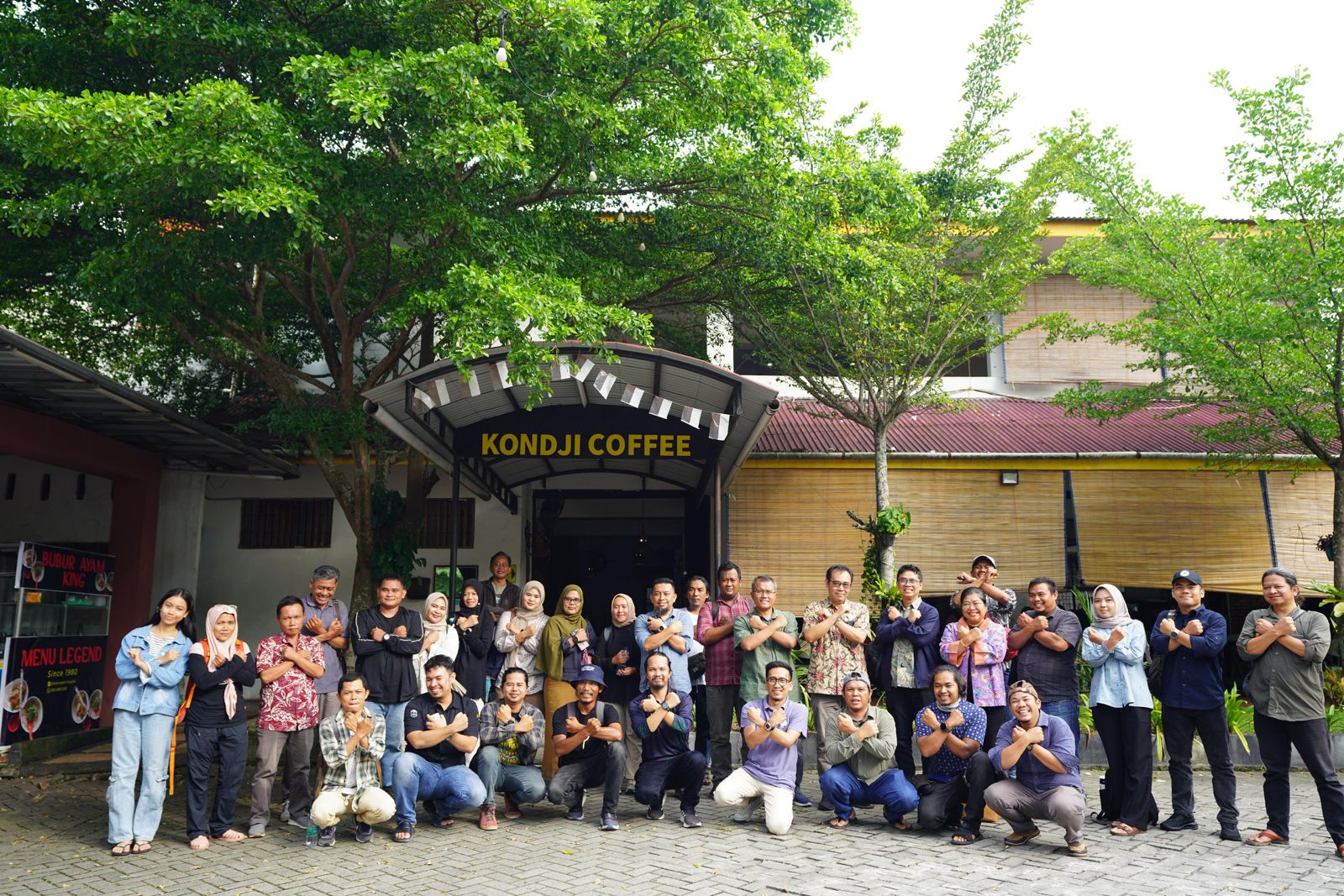
This commitment emerged during a discussion entitled "Dissecting the Carbon Economic Value (CVE) Policy and Its Synergy with Green for Riau: Reflections on Progress and Implementation Challenges," which took place in Pekanbaru on Monday (April 27) and was attended by more than 20 local, national, and international civil society organizations.
A Collaborative-Based Provincial Initiative
The Green for Riau Initiative emphasizes that this program is a jurisdiction-based initiative of Riau Province at the provincial level, designed to support the National Emission Reduction Targets (NDCs), ecosystem restoration, biodiversity protection, community empowerment, and access to climate finance by ensuring equitable distribution of benefits for communities. Covering 5.33 million hectares, GREEN for Riau focuses potential interventions on approximately 2.6 million hectares of forested areas with an emissions baseline of 2016–2021. This jurisdictional program has also attracted international attention and is being positioned as a pilot national strategy by global partners, including support from the UK government.
"This approach is not a sectoral project, but rather an effort to build a comprehensive and integrated carbon governance system at the provincial level," said Bambang Arifatmi, PhD, Country Coordinator for UNEP UN-REDD, during the presentation.

Key Progress: Governance, Data, and Integrity
Several important advances have been achieved, including:
- Strengthening governance (nesting governance design) between the provincial, national, and local levels, including the process for determining beneficiaries.
- Development of an integrated data system (one data), which will be implemented in a single portal to ensure transparency and accountability for carbon credits.
- Preparation of safeguards and SIS documents, including Free, Prior, and Informed Consent (FPIC), carried out collectively and collaboratively with stakeholders.
- Finalization of spatial data, which will serve as the basis/reference for calculating emissions and benefit distribution, is targeted for completion by the end of June 2026.
In this scheme, carbon integrity is a primary prerequisite. Carbon buyers demand "high-integrity carbon," namely carbon credits generated from areas with transparent governance and minimal social conflict.
Placing Communities as the Primary Subject
The discussion also emphasized that NEK implementation is not solely about reducing emissions, but must be grounded in social justice and the recognition of community rights. GREEN for Riau noted that of the approximately 341 identified indigenous communities, only 18 have received official recognition. This situation presents a major challenge in ensuring equitable benefit distribution.
"The largest proportion of benefits must return to communities surrounding forests and indigenous communities. This is not just about carbon, but about ecological justice," emphasized Mulyadi, Director of the Gambut Foundation.
Furthermore, benefit-sharing mechanisms are not always in cash, but can also be in-kind or through accountable community-based program schemes, including through institutions such as the Environmental Fund Management Agency (BPDLH).
The Strategic Role of NGOs in Implementation
This forum emphasized the important role of civil society organizations in:
- Monitoring the implementation of safeguards and FPIC at the grassroots level
- Ensuring that grievance mechanisms are effective and inclusive
- Supporting institutional strengthening and community mentoring, including in social forestry schemes
- Contributing to the development of programs based on local needs
Green for Riau opens up broad participation for NGOs to be involved in program planning and implementation through coordination with the GREEN for Riau secretariat.
Towards Transparent and Inclusive Carbon Governance
As part of its long-term strategy, Green for Riau will also expand its public campaign through various approaches, including Green Goes to Campus, podcasts, webinars, creative arts, and increasing the role of women and youth in the climate agenda. This initiative is expected to become a national model in the implementation of jurisdiction-based NEK, which is not only oriented towards carbon markets, but also strengthens social forestry, protection of indigenous communities, food security and