
Pekanbaru, March 5, 2026 — The world is moving increasingly rapidly toward a low-carbon development future, and Riau Province has a tremendous opportunity to be a key part of this transformation. However, as in any development process, fundamental questions remain: how to ensure that the benefits generated are felt by all parties, and that the entire process is fair, inclusive, and respects the diverse interests of stakeholders?
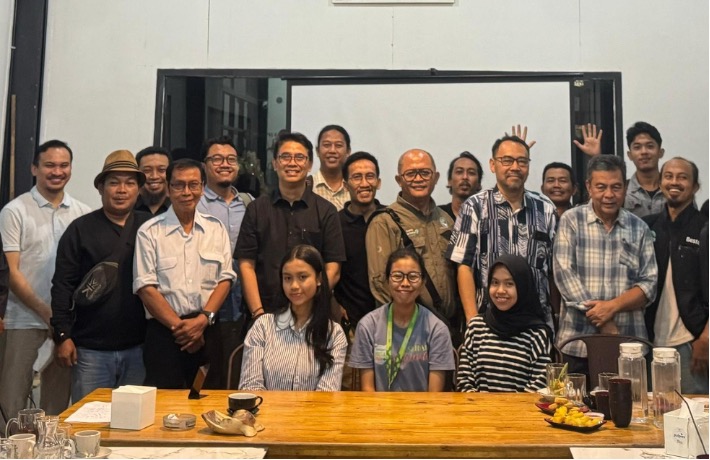
In a discussion titled "GREEN for Riau Perspectives from the Perspective of Riau NGOs," held at Kopi Radjo Se Nusantara, environmental activists from various non-governmental organizations (NGOs) working in the forestry and environmental sectors gathered to examine the GREEN for Riau initiative. This meeting was not simply a forum for socialization, but rather a platform for open dialogue to align understanding, exchange views, and ensure that the mechanisms developed do not leave out the most vulnerable groups in society.
The discussion was attended by a group of young environmental activists in Riau, active in advocating for forest, peatland, and climate change issues. The presence of the younger generation provided new perspectives on the importance of public communication and the role of young people in maintaining the sustainability of Riau's landscape in the future. Several female environmental activists also attended and actively contributed to the discussion, enriching the conversation with perspectives from their field experiences, particularly regarding women's roles in natural resource management, community-based economics, and environmental protection efforts at the grassroots level.
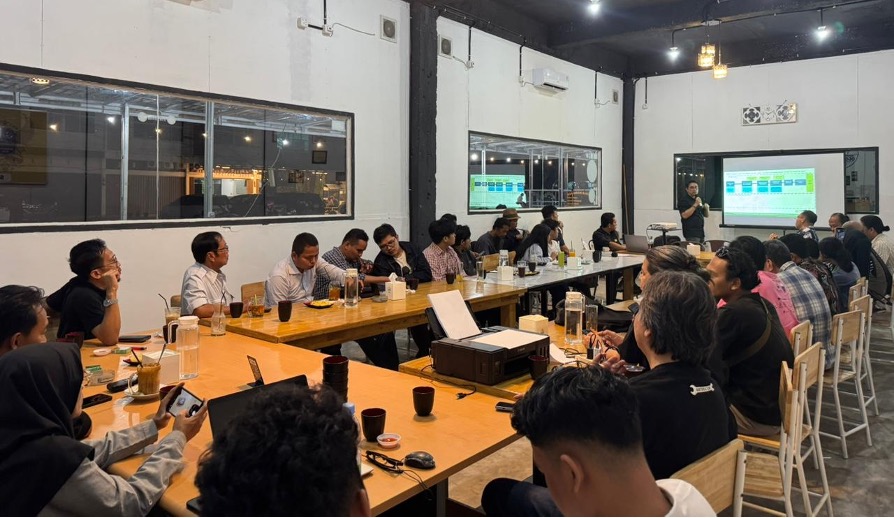
Bambang Arifatmi, Country Coordinator of the UNEP UNREDD Programme in Indonesia, is explaining the GREEN for Riau timeline.
This initiative, which adopts a provincial-level carbon credit approach (jurisdictional REDD+), seeks to access sustainable climate finance through emissions reduction efforts from the forestry sector. However, beyond the numbers and technical mechanisms, discussion participants emphasized several important issues that require collective attention: how a fair and transparent benefit sharing mechanism can be realized, how strengthening social forestry and recognizing indigenous communities can go hand in hand, and how the principles of human rights, GEDSI (Gender, Disability, and Social Inclusion), local wisdom, and Free, Prior, and Informed Consent (FPIC) can be integrated into every stage of the program.
The presence of the UNEP UN-REDD Programme Country Coordinator in Indonesia, Bambang Arifatmi, and GREEN for Riau experts is expected to bridge technical understanding with realities on the ground. Knowledge transfer to local governments and stakeholders until 2027 is a crucial part of this process, ensuring the sustainability of the initiative and its development into a sustainable collaborative effort.
Amidst the lively discussion, an honest reflection emerged from one participant who had participated in discussions about this initiative several times.
"I've participated in this discussion three or four times, and I still need remedial work. I suspect I don't understand. I'd like to hear from my friends here, what exactly do we view this as?" One discussion participant from a Riau NGO.
This statement serves as a reminder that discussions on carbon and climate finance should not be exclusive or difficult to understand. A simpler, more inclusive, and sustainable communication process is needed, so that all parties have an equal opportunity to understand, assess, and contribute meaningfully.
This discussion, part of a series of meetings that have been taking place since early 2026, serves as an important platform for civil society organizations in Riau to share their perspectives, field experiences, and critical notes on various green development initiatives in the region.
At the same time, GREEN for Riau is also committed to continuing to encourage participatory multi-stakeholder engagement, by opening broader dialogue with NGOs, communities, academics, local governments, and the public. The parties recognize that building trust, aligning understanding, and designing equitable mechanisms is a process that requires time and ongoing discussion.
This meeting affirms that NGOs in Riau are involved as critical and constructive partners in promoting sustainable forest management, reducing emissions, and improving community well-being. Collaboration between civil society organizations, government, academics, and the public is key to ensuring that the green economy agenda truly delivers equitable and sustainable benefits.
Ultimately, the carbon credits generated through the implementation of GREEN for Riau should be understood as a transitional instrument, an intermediate outcome that serves to provide a source of climate finance to accelerate the achievement of the 2030 FOLU Net Sink target. However, the essence of this program remains beyond the financial aspect. Its primary objective remains unchanged: ensuring the sustainability of forest and peat ecosystems, while ensuring that communities living, working, and depending on natural resources in Riau receive benefits fairly, proportionally, and sustainably. In this way, climate finance not only supports conservation but also strengthens trust, social legitimacy, and the well-being of communities as key partners in landscape management.