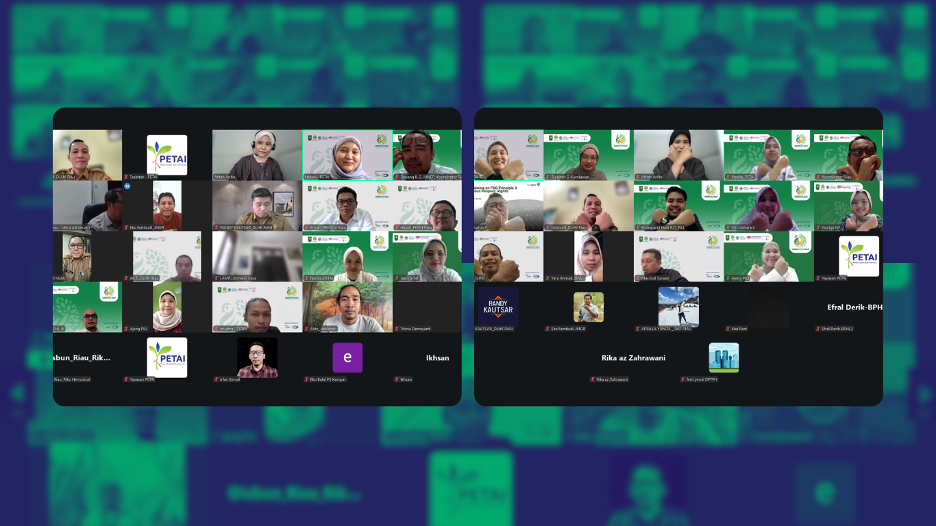
PEKANBARU, March 31, 2026 – The Riau Provincial Government, through the Environment and Forestry Agency (DLHK) and the Regional Development Planning Agency (Bappeda), reaffirmed their shared commitment to preserving forests and peatlands through an inclusive approach. This commitment was demonstrated through the implementation of a two-day GEDSI (Gender Equality, Disability, and Social Inclusion) training program held on March 30–31, 2026. The goal was to increase stakeholders' understanding and capacity to integrate the principles of gender equality, social inclusion, and the involvement of vulnerable groups in the implementation of JREDD+ in Riau Province.
The Head of the Governance and Human Development Division of the Riau Provincial Bappeda, Mr. Raja Juarisman, ST, M.Sc., stated that this training was crucial for maintaining the integrity of regional planning. "This activity aligns with the mainstreaming established in the Regional Medium-Term Development Plan (RPJMD). We want to ensure that every activity aligns with the 'Green for Riau' commitment, especially in targeting beneficiaries, focusing on those who have been marginalized, whether in terms of gender, disability, or socioeconomic status," he emphasized.
He also emphasized the importance of accurate targeting in the carbon benefit sharing (BSM) mechanism. "We must not allow Green for Riau to exacerbate gender issues or exacerbate issues of exclusivity. The program, instead of aiming to be inclusive, is actually creating problems," added Raja Juarisman.
Echoing this sentiment, the Head of the Forest Planning and Utilization Division of the Riau Environment and Forestry Agency (DLHK), Dr. Matnuril, S.IP, M.Si, MH., emphasized the importance of a more substantive understanding of inclusion that aligns with local culture. "GEDSI is not about numbers, but about the opportunities provided to all parties. Not just women, but also those with disabilities, to have equal opportunities to participate and have their voices heard," he said.
GEDSI Expert, Afifah Arifin, explained that GEDSI integration is crucial in mitigating social risks such as elite capture, or the control of benefits by a handful of elites. "Forests are not just about carbon, but about life. Through analytical tools like the Gender Analysis Matrix, we map the specific impacts of policies on vulnerable groups so that benefit sharing is targeted and does not trigger new conflicts," she explained.
The GREEN for Riau initiative targets the management of 2.6 million hectares of peatland and forests. By mainstreaming GEDSI, the Riau Provincial Government is optimistic about meeting international Cancun Safeguards standards and national safeguards standards, while ensuring that local communities at the grassroots level, especially women, indigenous peoples, and vulnerable, marginalized, and excluded groups who have traditionally played a role in forest protection, become the primary beneficiaries of the carbon economy scheme being developed.
The training, supported by the UN-REDD Programme and the United Nations Environment Programme (UNEP), and conducted in collaboration with the PETAI Foundation and the PILI Foundation as implementing partners, targets the GREEN for Riau Working Group (Pokja), which consists of the Safeguards Working Group, the Measurement, Reporting, and Verification (MRV) Working Group, and the Benefit Sharing Mechanism (BSM) Working Group. All of these Working Groups have been established through Governor Decree Number KPTS.65/I/2026 concerning the Establishment of the Coordination Team for the Implementation of the GREEN for Riau Initiative (Growing Resilience through Emissions Reductions, Community Empowerment, and Ecosystem Restoration for a Nurturing Future).